
.
Search is Evolving and Schema is Now Essential
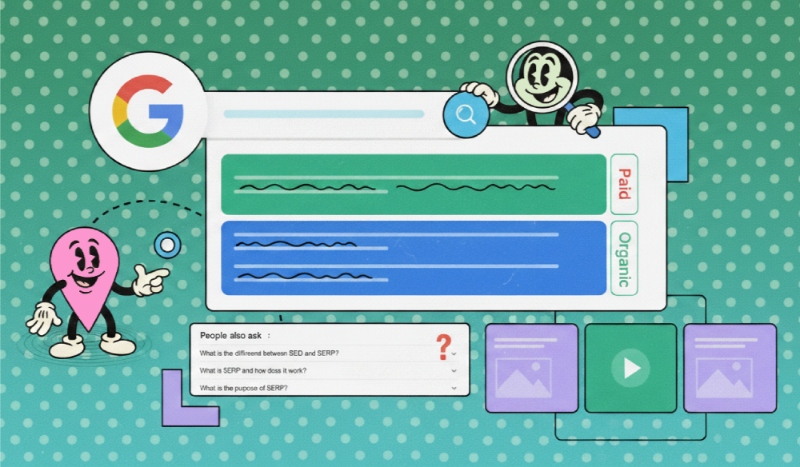
When I look at how search has changed over the past few years, it’s clear that we are no longer operating in a world defined by ten blue links and predictable click paths. Search results have become layered, visual and increasingly intelligent, with people now gathering insight, comparing options and forming trust signals directly on the results page. In many cases, users are learning what they need long before they ever reach a website, and if your content is not understood at that point, you lose visibility before the customer journey has even begun.
This shift has been driven by AI-supported discovery, growing zero-click behaviour and search interfaces designed to provide clarity and convenience instantly. Search engines are no longer simply matching keywords to pages. They are piecing together meaning, evaluating authority and deciding which information deserves to surface in the moments that matter. In that environment, structured data is not a technical extra or a box to tick, it’s one of the most reliable ways to make sure your content, your brand and your expertise are recognised, interpreted correctly and surfaced to the right audience.
During my time at boxChilli, I have spent a lot of time thinking about how humans and search systems interact, and how our SEO team can make that connection as clear and meaningful as possible. Schema plays a central part in that thinking. It helps search engines understand what a page represents, how it fits into a broader topic and why it should be trusted. When combined with strong technical foundations, relevant content and a thoughtful user experience, structured data becomes a foundation for visibility that doesn’t fluctuate every time Google experiments with its interface or ranking signals.
My intention in this article is not only to explain what schema does, but to help you understand why it matters strategically and how it supports long-term search performance. As AI continues to shape how information is presented and consumed, clarity becomes a competitive advantage. I’ve long been an ambassador for schema (just ask the office), but brands that embrace structured data today will be the ones that remain visible, credible and useful across the evolving surfaces of search tomorrow.
So, What is Structured Data in SEO Terms?
When I talk about structured data with clients, I usually describe it as a way of giving search engines a clearer and more confident understanding of what your content represents. Rather than relying purely on keywords and page layout, structured data provides explicit signals that label information in a consistent and machine-readable way.
Through the Schema.org framework, we can tell Google and other search engines when a page is a product, a service, a review, an event or an article, and we can go a level deeper by identifying details such as authorship, pricing, availability or business information. JSON-LD is the format most widely supported and encouraged by Google, and I prefer it because it integrates cleanly into templates (we’ve actually built integrated into our in-house SDK because of that reason!) and content systems without disrupting front-end experience or development workflows.
It is worth saying that structured data does not work in isolation, nor is it a replacement for high-quality, user-focused content. What it does incredibly well is reinforce meaning, reduce ambiguity and help search engines align your pages with the right intent. When strong content and thoughtful UX are paired with accurate markup, search engines are far more confident surfacing your information in richer and more visible formats, whether that means product snippets, knowledge panels, FAQ expansions or AI Overviews.
Why Schema Matters More Than Ever
I’ve been an advocate for implementing schema for years, so its benefits are not new to me….
What has changed more recently though is not the value of schema itself, but the environment it operates in. As search systems have become more interpretive and more confident in rewarding clarity, the brands that provide structured meaning consistently are the ones who build stronger, more resilient visibility.
Schema has shifted from being a technical ‘nice to have’ to a foundation for how a website is understood, connected and trusted across modern search experiences.
Zero-click behaviour and pre-click influence
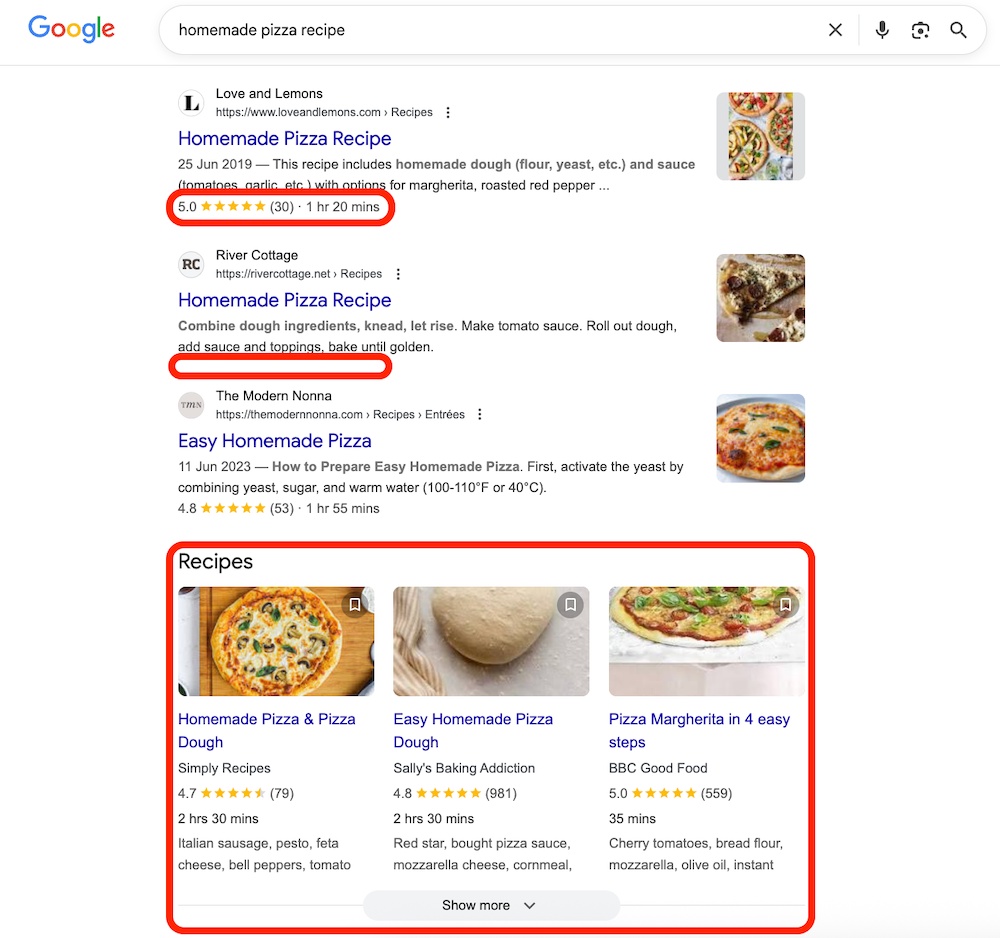
One of the most significant behavioural shifts I’ve seen in search is the amount of decision-making that now happens before a user ever reaches a website. People gather signals directly on the SERP, comparing ratings, checking opening hours, assessing legitimacy and forming trust before clicking anything.
When structured data is present, you stand a far better chance of being represented with rich information that guides that early judgement and beats your competition. Without it, you risk being perceived as less relevant or less credible simply because your competitors appear more complete and authoritative at the point of search, even if you offer a better service!
Entity-based understanding and the knowledge graph
Search algorithms and systems no longer rely solely on keyword matching; they rely on understanding entities and how they relate to each other. Schema helps reinforce who you are, what you offer and how those elements connect across the internet, making it easier for search engines to associate you with the right themes and audiences.
When I work with clients and account managers on structured data, the goal is not just visibility for a single page, but recognition as a meaningful and trustworthy part of a broader knowledge network, which supports long-term stability rather than short-term fluctuations.
AI-driven discovery and generative search
As AI-assisted search continues to evolve (looking at you ChatGPT, AI Mode, Perplexity and co), engines increasingly favour content that is structured, verifiable and easy to interpret programmatically. Schema provides that clarity by expressing meaning in a format AI systems naturally read and rely on. I see this becoming even more important as AI Overviews and conversational search expand, because brands that communicate their information in a clean and consistent way will be rewarded with visibility, while those who do not provide structured clarity may find themselves omitted from high-intent discovery entirely.
Trust, authority and verification signals
Trust has become a competitive differentiator in search, and structured data plays a valuable role in reinforcing legitimacy and expertise. When your business details, authorship, reviews, pricing and credentials are consistently marked up, it becomes easier for search engines to trust and present your information confidently.
I often describe schema as a secret validator, because it doesn’t replace strong content or brand reputation, it simply amplifies them by giving machines the context they need to treat your presence as credible and user-worthy.
Content interpretation at scale
For websites with multiple service lines, product variations or location pages, schema provides a structured framework that helps search engines interpret content consistently across templates. I’ve seen sites with great architecture and content still struggle to be fully understood because the meaning wasn’t reinforced in a machine-readable way.
When structured data is layered across core templates, clarity scales, which means your categorisation, relationships and relevance become harder to misinterpret as your website and content footprint grows.
Future-proofing visibility in evolving SERPs
Search behaviour is still evolving, and formats that dominate today may look different in two years, yet the underlying requirement remains the same even if GEO comes into play: search systems need to understand meaning with confidence.
Schema is part of preparing for that progression. It gives you a durable foundation that supports new surface areas, new result types and new discovery journeys. I see schema as less about chasing specific features and more about future-proofing visibility, because brands that prioritise clarity now will adapt faster as the search landscape continues to shift toward meaning-driven, intent-based discovery.
What This Means for Your Business and Your Customer Journey
- Potential customers form impressions before they click, so you need to look trustworthy and relevant directly in the search results, not just on your website.
- When your information appears with reviews, pricing, availability or expertise signals, people feel more confident choosing you, which leads to higher-quality traffic and better conversion rates.
- Customers expect clarity and reassurance instantly, and schema helps you meet that expectation by presenting useful information upfront, reducing friction in their decision-making.
- Being accurately represented across Google and other search engines builds familiarity and authority over time, which strengthens brand preference and reduces reliance on paid ads alone.
- As your business grows, structured data supports consistent visibility across locations, services or product ranges, helping customers find the right option faster.
- AI-driven search experiences favour brands that offer verified, clearly structured information, meaning you are more likely to be recommended and shown as a credible choice.
- Ultimately, schema gives your business more opportunities to appear, be trusted and be chosen, which improves both brand perception and commercial performance across the entire search journey.
Schema Types That Matter Most for Commercial Websites
One thing I always try to stress when talking about schema is that it works best when you think in terms of purpose, not volume.
There are hundreds of schema types out there (there’s so many I can’t keep up – Schema.org vocabulary currently consists of 792 types), but most commercial websites will benefit most from a focused set that aligns to intent, page templates and customer journeys. I tend to group them by what they help clarify, because that mindset keeps implementation grounded in outcomes rather than technical novelty.
Core business schema
At the foundation, you have the markup that tells search engines who you are, what you do and how your site is structured. Organisation or LocalBusiness schema, combined with Website, Service and BreadcrumbList, gives a clear picture of your identity and offering.
FAQPage and HowTo markup can still be valuable where they genuinely support helpful content, although I always advise using them thoughtfully. Google tightened eligibility around FAQ rich results on August 8th 2023, so the goal here isn’t to “force” visibility but to reinforce clarity where a user genuinely benefits from guided answers.
eCommerce and product-led schema
For eCommerce teams, Product, Offer, AggregateRating and ImageObject schema are essential. They communicate the details people care about most when deciding whether to click or convert: price, availability, reviews, images and core product facts.
I’ve seen well-structured product data improve both eligibility and stability for rich results, and that consistency gives shoppers confidence long before they reach a checkout page. It’s a practical example of schema supporting both search visibility and buyer reassurance at the same time, which ultimately results in more sales!
Content and authority schema
For content-driven sites, Article and Person schema help search engines understand expertise, authorship and topical relevance. I particularly like this layer because it connects content to real people, which supports trust and aligns with Google’s ongoing focus on helpful, reliable and people-first content (EEAT).
When a blog or insights section is backed by clear author markup and consistent contextual signals, the content feels anchored to a credible source rather than existing in isolation.
Experience and action-driven schema
There are also highly effective schema types that apply to specific business models or content formats. Events, Courses, Recipes, JobPosting and Ticketing schema unlock dedicated result types tailored to action and intent, and they can shorten the route between discovery and decision. When used in the right context, these formats create a more seamless journey for users who already know what they need and simply want to take the next step.
A practical way to approach it
In my experience, you don’t need to implement everything at once.
Start with the templates that directly support how customers discover, understand and choose you. Once those foundations are in place, you can layer in more specific schema types as your content grows or your business model evolves. That approach not only keeps things manageable, it ensures that structured data always supports real-world intent rather than becoming a technical exercise for its own sake.
Common Schema Myths and Mistakes
I’ve seen schema go wrong in a few familiar ways over the years, and most of them come from either misunderstanding its purpose or treating it as a one-time technical task. Schema works best when it is thoughtful, accurate and maintained, yet I still come across implementations that assume volume equals value.
There are a few misconceptions worth clearing up, because avoiding them will save you time and protect your visibility long-term. Trust me, I’ve learnt the hard way!
- Many assume schema is a direct ranking factor, but actually, its true value lies in helping search engines understand and confidently present your content.
- Relying solely on plugins often results in generic markup that does not reflect your business accurately or in enough depth.
- Adding as much schema as possible does not boost performance, because irrelevant or excessive markup can create confusion instead of clarity.
- Treating schema as a one-time setup leads to issues, since site updates and migrations often break structured data without anyone noticing.
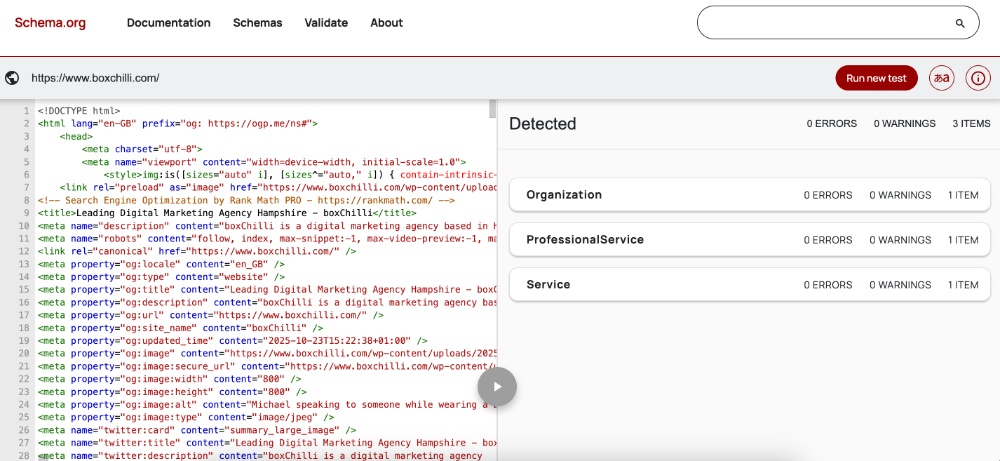
- Skipping validation creates blind spots, and unnoticed errors can quietly remove eligibility for rich results and structured surfaces.
- Copy-and-paste markup from other sites or AI tools may seem efficient but usually introduces inaccuracies that damage trust and usefulness.
- Schema performs best when it is intentional, maintained and mapped to your real content and customer journeys, not when it is treated as a shortcut.
Top Tips for Measuring Schema Impact
I’ve never viewed schema as something you measure purely through rankings, because its impact shows up in how confidently your brand is understood, how often you get chosen and how consistently you stay visible while others fluctuate.
It works best when you measure it as part of the wider search experience rather than in isolation. When structured data supports strong content, good UX and a clear value story, you don’t just earn richer results, you make every stage of the search journey smoother, more trustworthy and more predictable.
1. See where you secure enhanced results
If certain templates consistently earn rich results, it tells me search engines understand and trust the information you are providing. I usually begin with the ‘Enhancements’ section in Google Search Console to see how schema types are detected and whether eligibility is stable across key templates.
2. Compare CTR on enriched pages vs standard pages
Enhanced listings usually attract more intentional clicks, which is why I review CTR patterns to understand how structured context influences engagement and whether users feel more confident choosing you.
3. Watch how your SERP presence evolves
As schema matures, brands tend to appear in more formats across the results page – you can find this information on any good SEO tool like SERanking and Semrush. When I see a site expand from simple listings into product snippets, article cards or brand features, it signals deeper recognition and authority building over time.
4. Monitor brand and entity confidence
Growth in branded search demand and stronger entity association often start gradually, then accelerate. These signals show that your brand is being treated as a known, credible source, which compounds long-term trust.
5. Track visibility across surfaces
Discover, News and other experience-led placements often reward clearly structured content. When performance improves in these areas, it usually indicates your information is being interpreted accurately across more of Google’s ecosystem.
6. Connect enriched results to real outcomes
The most practical measurement comes from what users do after they click. If the traffic that sees richer results converts more effectively in GA4 or CRM tracking, it shows that schema is not just increasing visibility, it is strengthening the quality of your acquisition funnel.
Final Strategic Takeaways
If there is one thing I have learned through years of working with structured data, it is that schema is not a shortcut trick or a technical flourish, it is a way of helping both people and machines understand you clearly and consistently. Search experiences will continue to shift, interfaces will come and go, and AI-assisted discovery will only get smarter, yet the brands who can communicate who they are, what they offer and why they matter will remain visible, trusted and chosen. Schema is simply one of the most reliable ways to make that happen.
The websites that see lasting value are the ones that treat structured data and technical SEO as part of how they build and maintain clarity, not as an isolated task. They embed it into templates, update it when services evolve, pair it with strong content and remember that accuracy is where trust begins. When your markup moves in step with your site and your customers, it becomes an asset that supports everything else you do in search rather than something you bolt on after the fact.
A few principles consistently stand out:
- Schema works best when it reinforces real expertise, helpful content and a clear experience for users, not when it is added purely for decoration.
- Getting ahead now pays off over time, particularly as AI-led search leans harder into structured understanding and verified context.
- Technical and content teams need to work together so markup reflects real meaning and not just what a tool generates.
- Structured data deserves maintenance and review in the same way technical hygiene and content freshness do.
- Long-term trust grows when your meaning stays consistent and recognisable across all touchpoints, not just your website.
If you would like support reviewing your current setup or planning a structured data roadmap, the boxChilli team are always happy to help! Or if you fancy using one of our free tools, use our schema scraper below, in where you can easily extract and review structured data (JSON-LD) from multiple URLs in a single scan. Perfect for SEO audits, technical optimisation and ensuring your schema markup delivers the best possible search performance!
Schema Scraper
Scrape JSON-LD schema data from multiple URLs and download it as a JSON file.